Rocky terrain is identified by high slopes, with bare bedrock or crude debris (scree and talus) and slim or patchy soil cover. Trick processes consist of structural uplift and faulting that raise immune rock; antarctic carving and tweezing that strip regolith on steep inclines; and lasting wear and tear, erosion and mass losing that export fines.
1. Locate a Risk
As we discovered in Part One, guyline size (thus angle) alters just how the forces are borne by risk and substrate. It is for that reason important that you match your risks to the substrates you expect to come across.
Stakes require to be hard enough to pass through the soil but not too hard as to over-drive or fail. Lots of backpackers choose sand or snow risks in these atmospheres, but the rough substrates of Australia's inland varies typically have coarse roots that also these stakes can not penetrate.
If the substratum is extremely rough, think about taking added stakes along with your normal collection. Consider likewise using laying techniques such as the customized deadman anchor or line extensions to help safeguard your camping tent against wind and snow. It's constantly less complicated to fix a laying trouble before it comes to be a significant problem than in the middle of the night after your outdoor tents collapses. It is likewise worth practicing with your camping tent in the house before you head into the backcountry.
2. Link the Cord to the Stake
As we saw partly One, angling and burying a risk at the correct angle maximises its holding power. It is additionally vital to deploy a risk at the proper depth-- if the soil is also loose, it will be quickly taken out by a minimal force.
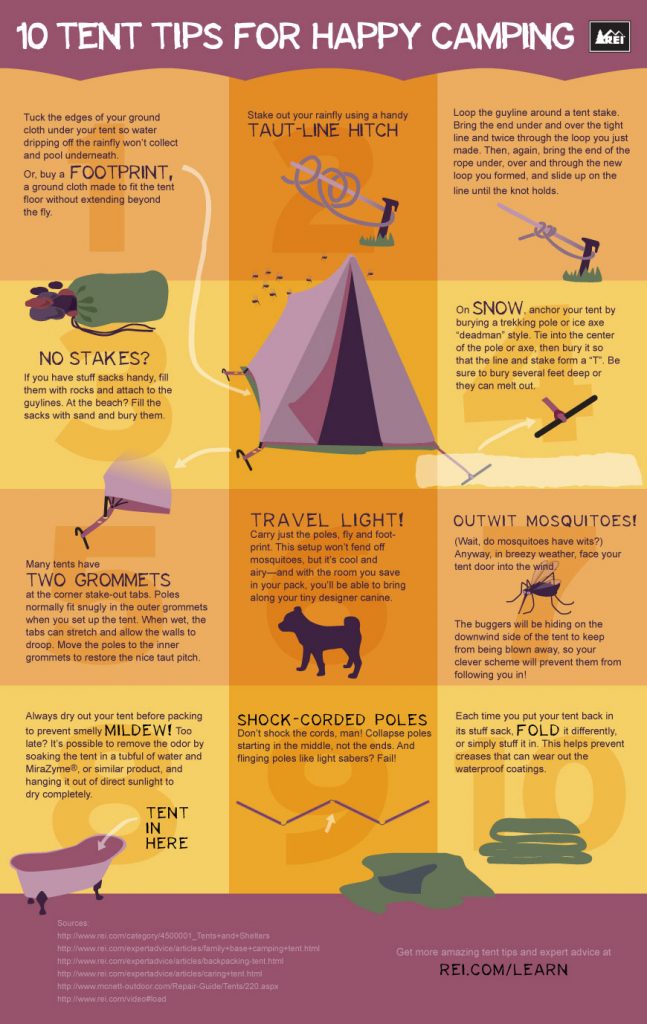
Changed deadman anchors (see this and this) are especially beneficial on rocky sites where it is difficult to hide a stake. These are more effective to linking your guyline straight to a stake, especially border ones, where the rock can abrade the line and lead to failure.
Utilizing a loophole on the end of your line and half hitching it to the stake avoids abrasion, specifically in gusty tent accessories conditions. An unexpected range of straightforward accessories are available to make tensioning and changing guylines less complicated, though they add an ounce or more of weight. If you plan to use them, check them in your tent before going out into the wild.
3. Connect the Cable to the Tarpaulin
When you have discovered your risk and hammered it in, you now need to link the cable to the tarpaulin. This can be done in a number of various means. A minimalist technique is a trucker's drawback with a slipped overhand loop. Nevertheless, it calls for a lot of cable to be effective and is unwise for long guyline lengths (such as the ridgelines of an A-frame tarpaulin).
An alternative is the adjustable line drawback. This knot permits you to conveniently adjust the tension of your ridgelines and is simple to link. It additionally provides some versatility, enabling you to relocate the line up or down based upon conditions.
You can additionally make use of a reef knot or square knot for this function, but they may come undone under hefty tons or scrambling. These types of knots ought to just be made use of in non-critical circumstances and with light tons. It is likewise an excellent idea to make use of intense tinted guy lines. This is a safety measure, especially if you are camping in an area that gets dark very early and can be hard to see.
4. Tie the Tarpaulin to the Stake
As we saw in Part One, releasing risks at the right angle increases their holding power. This is particularly crucial in loosened substratums where the force of guyline pull is increased by the inverse of stake/substrate friction-- this can easily draw a survey.
The McCarthy drawback calls for a lot of cord to run, and it is impractical for very long guyline sizes like ridgelines. For these scenarios, I advise utilizing a trucker's hitch with a slipped overhand loop.